
7 Steps to Kickstart Your Marketing Strategy

A while ago, we shared this framework on our social media.
As it is incredibly helpful, and too good not to share, we decided to also publish it here on our blog.
So if you are currently launching your business or entering a new market, this article is for you.
I initially developed this 7-step framework after completing one of my biggest projects back in 2024. I had helped one of my clients, an Asian consumer tech brand, craft their marketing strategy for their Western target audience.
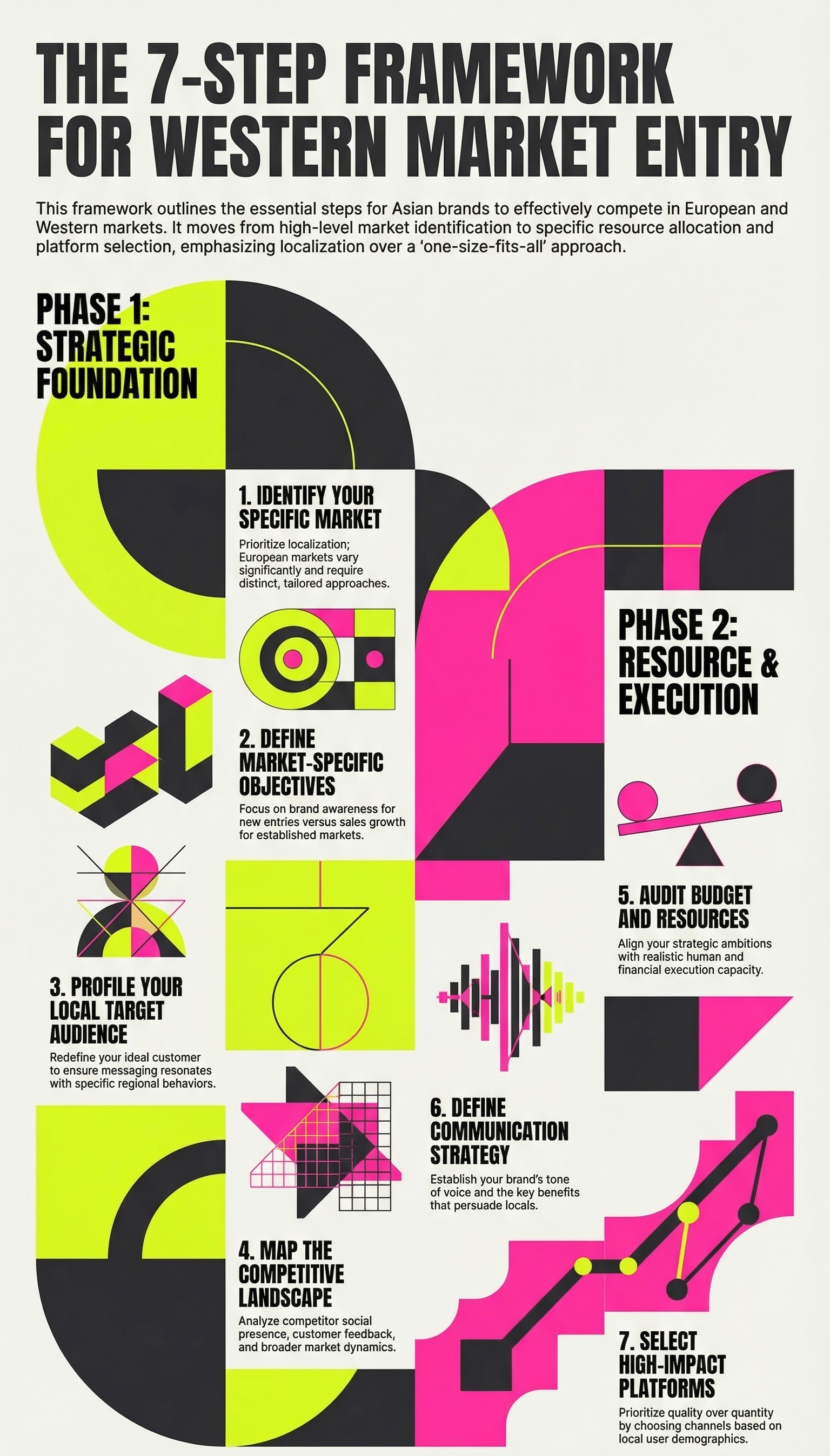
To kick off this comprehensive strategy planning project, I followed 7 essential steps to tailor the best possible approach for my client. I strongly believe in openly sharing tips and insights. Hey Stranger’s goal is to empower Asian brands to strengthen their marketing and compete more effectively in European and other Western markets, instead of gatekeeping this information.
So sit back and explore these 7 steps. I can assure you they will make planning your marketing direction much more straightforward.
1. Which market are you targeting?
This initial question is crucial, as many Asian businesses tend to apply the same strategy across all markets. However, as I’ve emphasized many times before, markets can vary significantly. This is why marketing localization is key when it comes to properly building brand awareness in a specific market.
Also, please keep in mind that there are huge differences in the European market. This is why it is important to have a clear plan of which specific markets to target.
2. What are your objectives for this specific market?
Your market objectives may also vary depending on the region. If you are entering a new market, your goal might focus on raising brand awareness and capturing your audience’s attention. On the other hand, in more established markets, your strategy might aim to boost sales.
3. Who is your target audience?
Target audiences can differ by market. It is crucial to clearly define your ideal customer in relation to your target market. This ensures your strategy resonates effectively in each specific market.
4. What are your competitors doing? What does the market landscape look like?
Understanding your competitive landscape is key. I recommend not only monitoring competitors on social media and subscribing to their newsletters, but also gathering insights from customer feedback. This will deepen your understanding of your target audience.
But that’s not all. I also suggest thoroughly studying market trends, successful strategies from other brands, and the overall market dynamics.
5. How much budget and how many resources are you able to allocate to this market?
This fifth step is rather special and often overlooked by many businesses. Based on my experience in Taiwan, marketing budgets and human resources are often limited. While an excellent strategy can be planned, insufficient resources for execution can hold back success.
It is crucial to align your marketing strategy with realistic expectations and available resources.
6. What is your overall communication and content strategy?
This step is not about specifying topics for different channels just yet. It is about defining your overall tone of voice and key messaging elements. Highlight the specific benefits that will persuade your audience, and decide whether your communication should be more formal or informal.
7. Which platforms will you leverage to execute your marketing strategy?
Based on your previous answers, determine the channels you want to use to promote your brand, product, or service. While there are many platforms available, I recommend focusing on a few key channels, especially when entering a new market, and executing them well - quality over quantity.
Your choice in this final step ties closely to your previous answers. For example, if your goal is to drive sales, platforms like Instagram can still make direct traffic generation more challenging, even as the platform tests clickable links in captions for a limited group of users. Social platforms often create friction between content discovery and website visits, so this needs to be considered when choosing your channel mix.
Are you targeting a younger demographic? Platforms like TikTok may be worth considering. It is crucial to understand local behaviors and preferred channels in your target market.
Congratulations, you’ve completed all 7 steps! I trust you now have a clearer direction for your marketing strategy.
Now it is time to develop specific strategies for each platform and channel. Define the approaches for your marketing channels and identify KPIs to track progress towards the primary objectives you outlined in step 2.
Of course, there are still more questions to answer. But once you have narrowed down your marketing direction and clarified the essential information from the steps above, your planning process becomes much easier.
And in case you need support with planning your strategy or answering the questions above, feel free to reach out anytime, we are always happy to tackle this challenge together.
